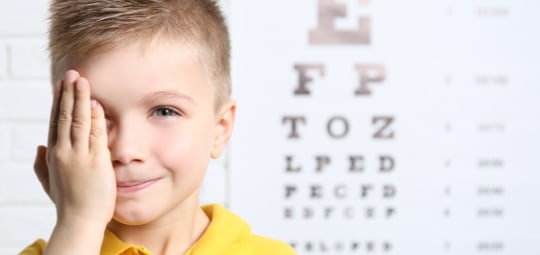
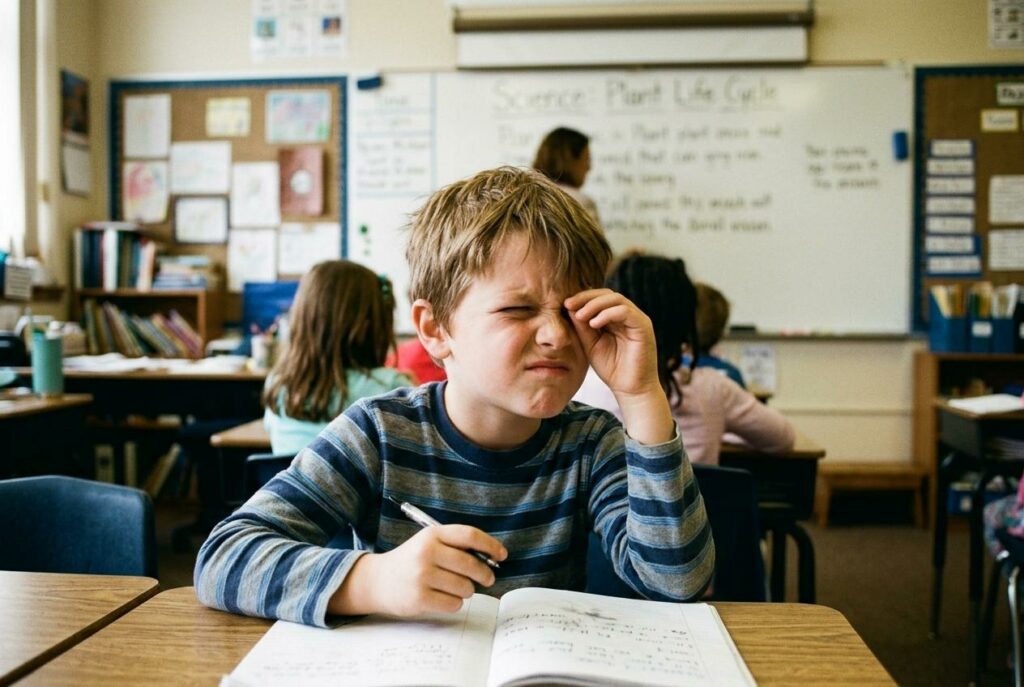
You notice your child squinting to see the blackboard at school, or maybe you find yourself holding books farther away to read the text clearly. At Stoney Creek Optometry, our team understands that these everyday struggles can point to common vision problems that affect millions of people across Canada.
Myopia (nearsightedness) can make distant objects appear blurry while close objects stay clear, whereas hyperopia (farsightedness) may cause nearby objects to blur while distant vision remains sharper. Understanding these two conditions can help you recognize when it’s time to schedule comprehensive eye exams and explore your treatment options.
What Are Myopia and Hyperopia?
What Is Myopia? I’m
When you have myopia, your eyes focus light rays in front of your retina instead of directly on it. This means you can often read a book or work on your phone without any trouble, but street signs and faces across the room may appear fuzzy.
You might find yourself moving closer to the TV or struggling to recognize friends from a distance. Myopia is also called nearsightedness because near objects remain clear, while far objects can become difficult to focus on.
What Is Hyperopia?
Hyperopia, also known as farsightedness, works in the opposite way: light focuses behind your retina instead of on it. You can typically spot details on distant billboards or see clearly across a parking lot, but reading restaurant menus or threading a needle can become more challenging.
Many people with mild hyperopia may not notice problems until they reach their 40s. Eventually, detailed work can become tiring and uncomfortable because your eyes must work harder to maintain focus on nearby objects.
Common Signs and Symptoms You Might Experience
Myopia Warning Signs
Myopia can often develop in childhood, and managing symptoms early is important for your child’s learning and development. Daily activities can provide clear clues about myopia development, such as:
- Squinting to see distant objects
- Headaches from eye strain
- Difficulty seeing blackboards or TV
Hyperopia Symptoms to Watch For
Hyperopia symptoms often appear during close-up activities like reading, crafting, or computer work. Common signs of hyperopia include:
- Eye fatigue after reading
- Blurred vision up close
- Burning or aching around the eyes
While myopia and hyperopia can share some overlapping symptoms, every person experiences vision changes differently. Children may not always recognize or communicate that they are having trouble seeing, which can make regular eye exams important for early detection and myopia control.
What Can Influence These Vision Problems?
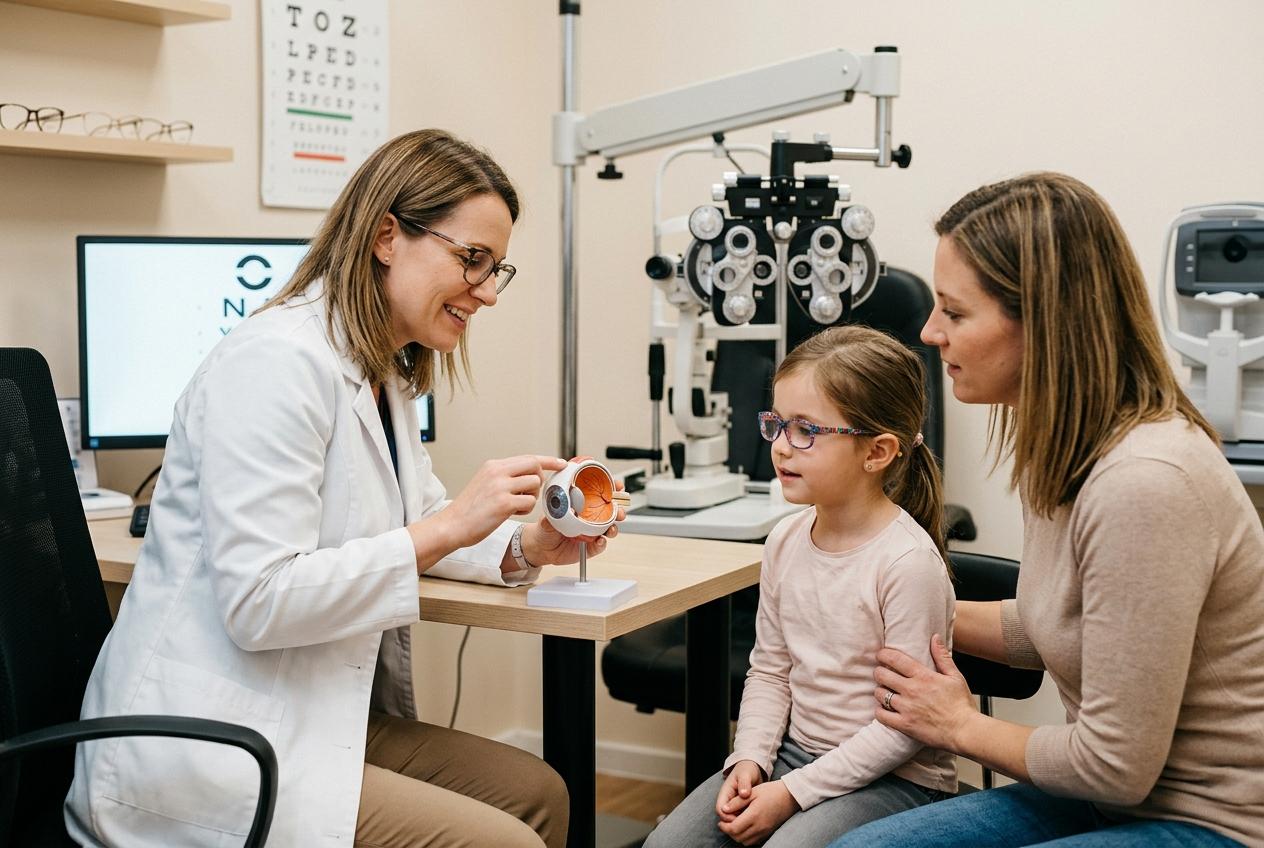
Why Myopia Develops
Your eyeball shape determines how light focuses inside your eye. In myopia, the eyeball grows longer than normal, creating that front-focused light pattern that blurs distance vision.
If your parents wear glasses for nearsightedness, you have a higher chance of developing myopia too. Spending long hours reading, using computers, or doing other detailed work can also contribute to myopia risk, especially during childhood when eyes are still developing.
Hyperopia Root Factors
Hyperopia typically develops when your eyeball is shorter than average, resulting in light focusing behind the retina. Unlike myopia, which often develops during school years, hyperopia is usually present from birth.
Your family genetics play a strong role in hyperopia development. Most people inherit this condition from their parents, though symptoms might not become noticeable until later in life when the eye’s focusing ability naturally decreases.
Treatment Options Available to You
Glasses and Contact Lens Solutions
Corrective lenses can provide relief for both myopia and hyperopia by redirecting light to focus properly on the retina. You may notice clearer vision right away, whether you’re reading fine print or spotting details across the room. Depending on your lifestyle and preferences, there are various options available to you, such as glasses or contact lenses.
Glasses can offer a solution with many frame styles to match your personality and lifestyle. Contact lenses can provide freedom from frames during sports, social events, or whenever you prefer an unobstructed view.
Specialized Treatment Methods
Children with myopia can benefit from specialized myopia control programs that help slow the progression of nearsightedness. These treatments help protect long-term eye health and may reduce the need for stronger prescriptions later.
Laser surgery consultations offer insights into permanent correction options for eligible adults, while specialized contact lens designs can provide enhanced comfort and vision quality for various lifestyle needs.
Schedule Your Eye Exam
Don’t let blurry vision hold you back from enjoying life’s details, whether you’re reading your favourite book or watching your child’s soccer game. At Stoney Creek Optometry, we strive to make eye care accessible for all our patients. Book your eye exam today and discover how clear, comfortable vision can improve your daily activities.