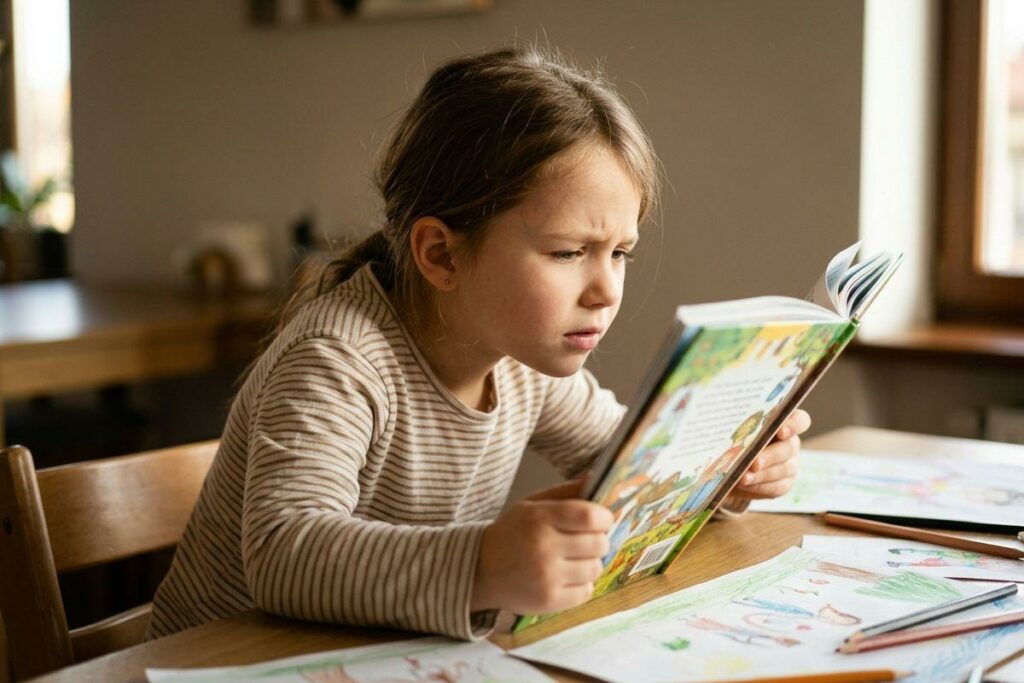
Kids adapt to blurry vision without ever mentioning it. A child who can’t read the whiteboard slides forward a row, and one who can’t focus on a page just holds it closer.
The first clue usually looks like a habit instead of a complaint. Watch for a few everyday behaviours at home, and book a children’s eye exam when one of them sticks around. Vision changes as kids grow, too, and how often they need an exam depends a lot on their age.
Why Kids Rarely Mention Vision Problems
Your child has never seen the world any other way. Fuzzy letters and a soft TV picture feel normal to them, so there’s nothing worth reporting.
Those vision issues matter at school, where poor vision can slow reading or make sports harder than they should be. Some conditions also respond better to treatment when we find them early, while a young child’s visual system is still developing.
8 Signs Your Child May Need an Eye Exam
You spend more time with your child than anyone, so you’re in a good spot to notice small changes. A few habits tend to show up again and again when eyes aren’t working the way they should.
Keep an eye out for these 8 habits:
- Squinting at the TV, the whiteboard, or a book
- Holding books and screens close to the face
- Rubbing their eyes when they aren’t tired
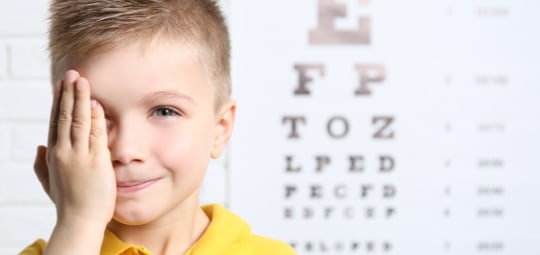
- Covering or closing one eye to focus
- Tilting or turning their head to see something
- Losing their place or skipping lines while reading
- Headaches or sore eyes after homework
- An eye that turns in, drifts out, or looks crossed
Any one of these on its own can be nothing. Pay closer attention when it lasts more than a week or two, or when a teacher brings up something similar.
Common Vision Problems Behind These Signs
Most of what we find at a children’s exam falls into a few groups, and each one shows up a little differently at home.
Nearsightedness (Myopia)
A nearsighted child sees clearly up close and struggles with anything far away. You might notice yours sitting right in front of the TV or asking to move up a row in class. Myopia often progresses while a child is still growing, so your optometrist may suggest ways to slow it down.
Farsightedness (Hyperopia)
Farsightedness makes close work the hard part while distance vision stays clear. Reading takes more effort than it should, and your child’s eyes may ache or water after 20 minutes with a book. Plenty of kids skip the book instead.
Lazy Eye and Crossed Eyes
Sometimes one eye works harder while the other falls behind, which is how amblyopia develops. An eye that turns in or out often goes along with it. Treatment tends to work better the younger a child is, so bring us anything that looks off, even if it only shows up when they’re tired.
How Often Kids Need an Eye Exam
Vision can change quickly during the school years, and a child who saw well last fall may not this year. Children’s eye exams in Ontario are covered by OHIP, so cost doesn’t have to factor into the decision.
Here’s the schedule we suggest for most families:
- A first exam between 6 and 12 months of age
- A second one between 2 and 5 years, before school starts
- A yearly exam from age 6 onward
Book one even when nothing seems off. Vision problems can develop quietly, and a yearly visit gives us a baseline to measure the next one against.
Why School Screenings Aren’t Enough
A quick screening at school can flag a few problems, but it misses many others. It usually checks distance vision and little else.
A full exam goes deeper. The optometrist looks at how the eyes focus, work together, and stay healthy, which a hallway screening simply can’t do.
What Happens at a Children’s Eye Exam
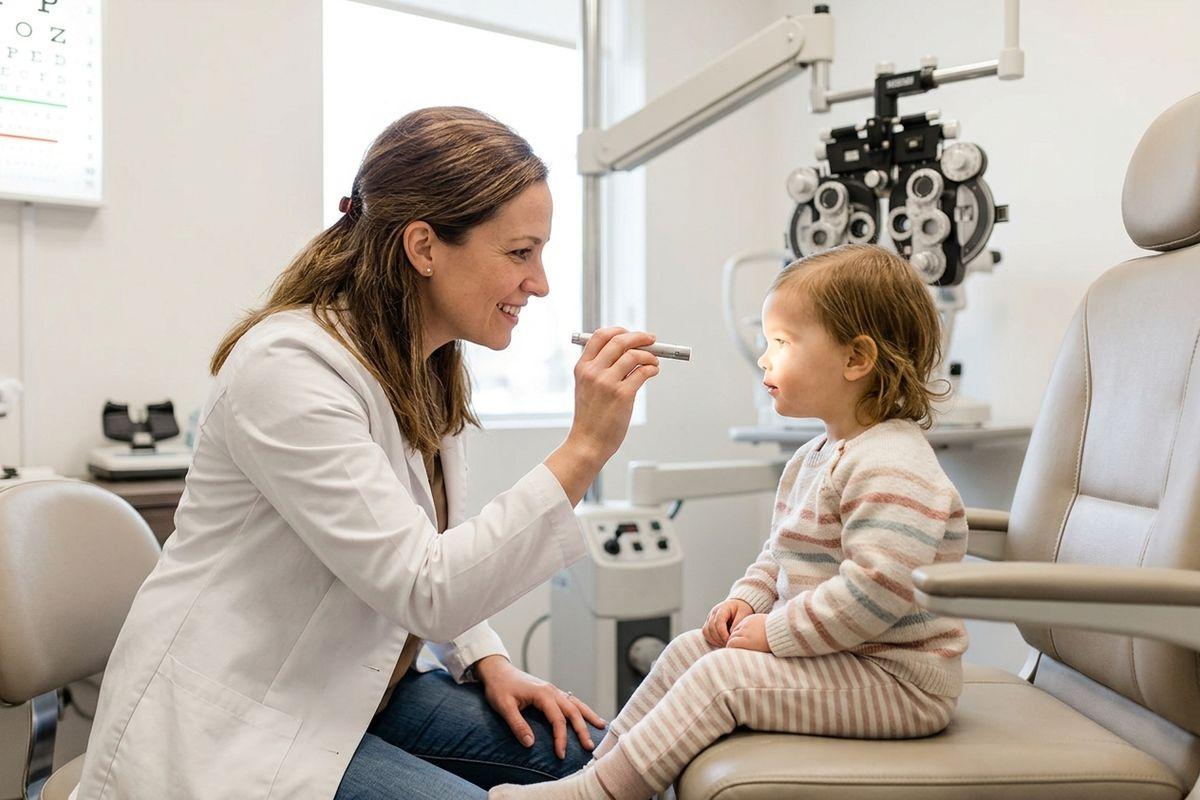
You might wonder how an eye doctor tests a wiggly toddler who can’t read yet. We use pictures, lights, and shapes instead, and most kids treat the visit like a game.
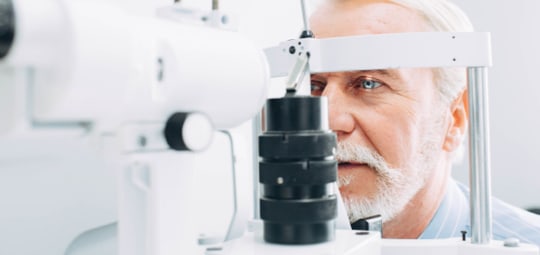
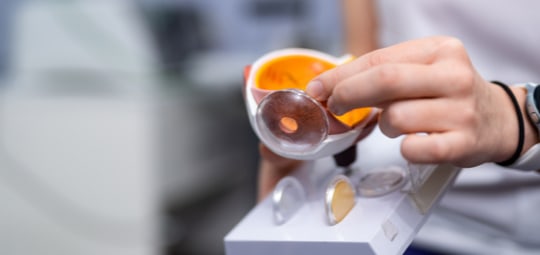
We check how well each eye focuses and how smoothly it follows a moving object, then look at how the two work together as a pair. We also check eye health, so you can feel confident about your child’s eyes.
Simple Ways to Support Your Child’s Vision at Home
Daily habits won’t replace an exam, though a few of them can make long school days easier on young eyes:
- Send them outside to play every day, since time outdoors may slow myopia
- Build in a break from screens every 30 to 60 minutes
- Set up homework in a well-lit spot, with the book or tablet about an arm’s length away
- Add sunglasses with full UV protection for bright days outdoors
Book Your Child’s Eye Exam
Your child’s eyes shape how they learn and play, and it’s easier to manage a small change when you catch it early. Trust what you notice at home, even when your child insists everything looks fine.
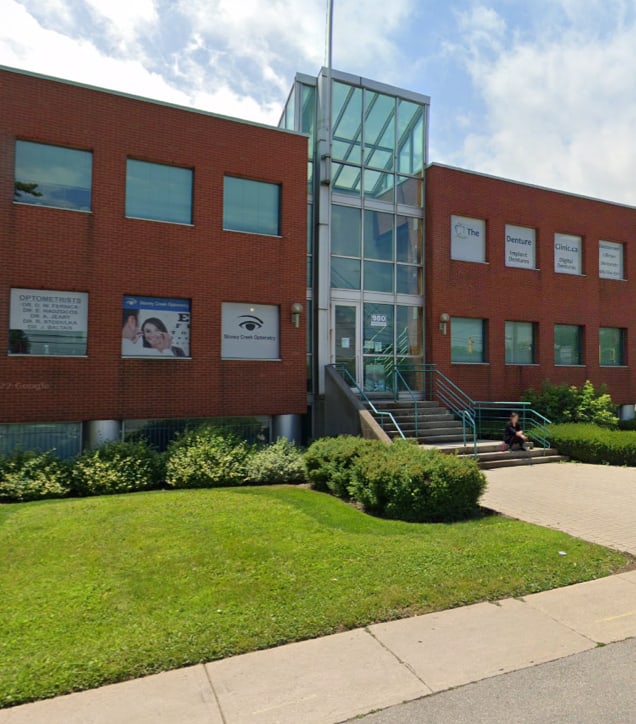
Stoney Creek Optometry cares for families of all ages, with evening and Saturday hours for busy weeks. Book your child’s eye exam and let us take a closer look.